When looked at from afar, I’m not that bad. It’s up close, after getting to know me, and really looking at me, that people most often realize that I’m not all that special. Like the shiny new technology or the cool new toy, at first, I’m appealing. But then the novelty wears off.
This is how I feel today.
This morning, at the SPS district Communication Arts Curriculum Institute—fancy name for 4 hours worth of workshops—I presented twice. First, I shared about Twitter to a small, but very engaging group of teachers. I was told by those in the building (Central High School) that Twitter was available and “open” for use, and that it would be for the workshop, but it wasn’t. This meant that “getting our hands dirty” by making accounts and exploring people to connect to was impossible. Luckily, some brought their smartphones, and were able to set up accounts via their phone, and even download an app for use. In reflection, a huge glitch did occur, but overall I feel like it went amazingly well. Everyone was talking, sharing with one another, asking questions, and I was able to show some really cool stuff. Huge thanks must go to everyone for simply doing your thing on Twitter. I’m really excited about the idea that 12 new teachers in our district will be using Twitter to connect to other teachers and share their own learning and experiences through the medium.
Second, I presented with Keri. Now every time I try to describe this “thing” that we presented on, I have a really difficult time, because I guess I’m not looking at the big picture and I’m more looking at all of the little details. I’m more jumbled, like JFK, rather than specific, like Abe Lincoln. Essentially, the OWP is partnering with SPS regarding assessment driven writing instruction. That’s the best, and simplest way I’ve ever described it. The professional development that we are offering is also part of a research study. Because of the research study aspect, we had to be very careful how we worded things; we could not and cannot be coercive in any way. Basically we tried to describe things in the most wonderful way positive, and hope that people bought in. It’s what teachers do on a regular basis, and it’s not easy.
We’ve invested loads and loads of time and effort into this project already, and we finally were given an opportunity to present our thinking and ideas to the people. It’s kind of like what a teacher does through the year, especially a first year teacher. I remember I spent so much time through the summer, before my first year of teaching, thinking and reading and planning and imagining what things would be like. Then finally, when the day rolled around, very little of it resembled what I imagined. Well, today, some of it did resemble what I imagined, but now, with hindsight, I see that all of our plans, no matter how convincing and worthwhile they seem to me, mean nothing to anyone outside of my own brain.
I was comfortable and relaxed as I sat and talked with the teachers. I didn’t engage them on a personal level enough, I know that and I knew that. Keri is much better at that, and much more intentional about it. I knew that I wasn’t going and meeting them, and engaging them. I did this on purpose, and do this on purpose, and now looking back, maybe it was wrong. I didn’t want to force myself into a conversation, nor did I want to pretend to be interested in some contrived conversation simply because I was there. Also, I know the divide shouldn’t be present, but a divide was present in the room. If you weren’t recognized, then you weren’t really welcomed into the circle. I’m cool with that. In fact, I almost encourage that. And that’s what I need to correct. I’m the type of person that values an atmosphere that drives people together, and I think today, through how things were presented by Denise, that’s what happened. That’s how I read the room, so I didn’t actively engage in conversation.
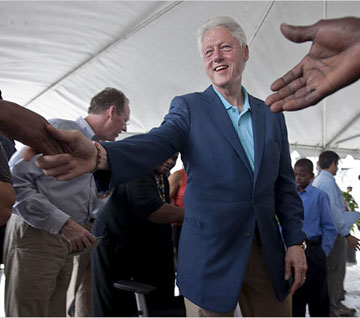
Maybe that wasn’t the right thing to do. Maybe, as part of this whole “teachers teaching teachers” thing, I should have more intentionally connected to the teachers, introduced myself and met them. Honestly though, if I would have done that, I think I would have felt like a politician, working the crowd and schmoozing. Anyone who knows me knows that that is something I could not do. It is something that I would not do. Even if that isn’t what I would have been doing, the fact is, it’s what I would have felt like I was doing. So I didn’t do it. I will admit that, as I watched Keri meeting and connecting with many of the teachers, I thought about how that’s what Keri does. She meets people. She engages in conversation with anyone. I never know if she’s trying to win people over, or if she’s genuinely interested in them. I guess I’m not that interested in some people.
There’s still a lot to be mined from today’s experiences. There’s still a lot to be processed. I would love to talk about this with others, to hear what others think. Honestly, I would love to be able to sit down with some of the people at each of the sessions to simply talk about things, to hear about how some of the teachers want to use Twitter, or hope to use Twitter. I want to get honest and critical feedback about how much they got out of the session. I would love to sit down with those teachers who are choosing not to participate in the PD or in the research study and simply listen. I want to hear what they have to say. I really want them to talk me through what they think would be worthwhile for their time. I’m less interested in why they don’t want to participate in this PD, and more interested in what type of PD they would be interested in. And I would also like to sit down with some teachers who are participating in the PD in order to gauge what they expect, and what they hope to get out of it. I want to listen to them also.
Listening is powerful. It gives people voice. It empowers them. I guess I feel like, so often, teachers aren’t given voice, or aren’t empowered. As teachers, we see what buy-in and confidence can do for our students. Confidence is what I call a “game-changer,” especially for 8th graders, living during some of the most insecure, self-doubting times of life. Listening to a kid does wonders. Helping a kid grow more confident in himself/herself, truly in themselves and not in what they just accomplished or in what they can accomplish but because they live and breath and exist and should be confident—that changes things. Why can’t we see this need in ourselves, or in other teachers?
Yes, 8th grade is hard because of how unsure we are as adolescents and how awkward everything seems, but life is pretty hard too. I can remember when I went to college, the thought struck me, “This is the first time my parents have ever had a son in college, and a son who hasn’t lived close to home.” That thought revealed to me how hard life could be and was for them. Sure, I wasn’t exactly sure of what I was doing; I was the one moving 700 miles away to go to college. But they were also allowing me/helping me do that, and they were dealing with their own issues because of it. Even thought they were adults, they didn’t know how everything would work out; life was hard for them too.
Why can’t we realize, as adults, as teachers, that we need voices, and we need confidence? Why can’t we slow down, or carve out time, to listen to one another and to support one another? It’s always easier to gripe and complain. This year, I want to stop taking the easy road. This year, I’m ready to learn more than I teach. This year, things are going to be different, and I want to be a change-agent, not only for my students, but also for teachers in my building and in my district.